Connect with us

Lifestyle

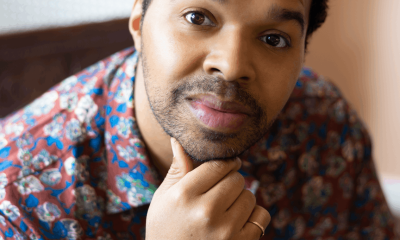
Dr. Jarrett on how his outlook for life changed after he outlived a Plane crash

mm

Published

on

Doctor Jarrett survived a plane crash when he was a nine-year-old boy. After this, he discovered a fresh value for life and strong willpower to dedicate his life to public service and saving lives by becoming a doctor. 

December 20 ,1995, which was supposed to be the start of a fun vacation for young Jarrett and his family, became a nightmare. Caught in a snow blizzard, their plane crashed on the JFK Airport. Fortunately, Jarrett and his family lived through this accident. 

It is facing death, that gives a clear perspective to the survivors that how beautiful life is and how gifted they are. Jarrett was thankful to have lived through and made up his mind to help other people understand the brevity of life and live to the fullest. 

Jarrett made up his mind; he wanted to be a doctor. He worked hard and tough to live his dreams. Qualified to take the Hippocratic Oath, he now assists people to fight their ailments. It became his destiny, his drive, and his mission. 

Popularly known as Doctor Jarrett on Instagram, he has a noble educational background. He graduated from the Summa Cum Laude in Bachelor of Science and did his Honors in Exercise Physiology from Rutgers University in 2008. He also acquired a Master’s degree in Science- Human Nutrition from Columbia University in the year 2009. Finally, in 2013, he graduated from Rowan University as Doctor of Osteopathic Medicine (D.O.). He served at St Joseph’s Regional Medical Center in the Anesthesiology Residency, and in 2018, he graduated as Attending Anesthesiologist. 

This information showcases that Doctor Jarrett is the type of working professional who prefers to keep himself engaged with work. But even with this busy schedule, he has made time for other social duties. He volunteers at a hospital as EMT, works as a guide for potential students, publishes research papers as a nutritionist/ sports trainer, and tutors other premed juniors. 

During an emergency case, Dr. Jarrett also saved a man’s life by performing CPR at a local Sushi Diner. He has also performed the Heimlich Maneuver to save a middle-age man from choking during a party. His commitment towards his ethics and drive for helping others got him in the list of Top 100 most eligible singles of 2018 of Business Insider. Jarrett aspires to be the star of a short skit, just like his third-cousin – Stephen Dorff, an American actor. 

Being a health influencer on social media, with almost a million followers on Instagram, Doctor Jarrett frequently mentions: “Give them your entire heart, but don’t forget to have some fun too.”

A resident of New York City has left this big-town for his birthplace – the Sunshine State. Working as an attending Anesthesiologist, he has expertise in managing perioperative functions and patient care. He anesthetizes patients regularly for general and complex surgical operations, apart from emergency cases. He is a clinical professor/educator in Miami, for the operating rooms for nurse anesthesiologists, junior doctors, and health professions trainees. 

He says that his main aim is to continue as an Anesthesiologist, but also to involve aesthetic medicine for assisting others in feeling and looking younger.

When we look back on the day of the plane crash that almost took his life, we see that it changed his life for good. Dr. Jarrett feels to be blessed to have survived and given life for helping people around him live life to the fullest. 

The idea of Bigtime Daily landed this engineer cum journalist from a multi-national company to the digital avenue. Matthew brought life to this idea and rendered all that was necessary to create an interactive and attractive platform for the readers. Apart from managing the platform, he also contributes his expertise in business niche.

Continue Reading
Advertisement
Click to comment

Leave a Reply

Your email address will not be published. Required fields are marked *

Lifestyle

The Future of Education Through Patricia Vlad’s Eyes

mm

Published

on

The traditional systems that once defined learning, rigid curricula, standardized testing, and a narrow focus on academic performance, are increasingly being questioned. And why is that?

Starting in the 1880s, thinkers like John Dewey advocated for a shift in teaching methods, leading to the rise of progressive education. Unlike traditional models that emphasize rote learning and job preparation, progressive education puts students at the center of the learning experience. Changemakers like Patricia Vlad also believe that hands-on, experiential learning is the key to deeper understanding. This approach prioritizes critical thinking, curiosity, and personal passions, encouraging students to become lifelong learners who actively engage with new ideas and problem-solving. Schools and parents that embrace this model focus not just on what students need to know but on how they can continue to grow and adapt throughout their lives.

As the world changes, so do the skills, knowledge, and adaptability students need to succeed. The future of education is about personalization, inclusivity, emotional intelligence, and meaningful learning experiences.

With years of global teaching experience, Patricia has seen firsthand how different education systems approach learning. She believes that the future of education must embrace neuroscience, technology, and self-awareness to create a system that is not just efficient but also empowering for students.

“Education should be about more than just passing tests. It should equip students with the skills to navigate life, understand their strengths, and feel empowered in their learning journey,” Patricia emphasizes.

The Future Belongs to the Emotionally Intelligent

Unlike technical skills that may become obsolete with automation, EI – our ability to understand and manage emotions, build relationships, and navigate challenges, remains uniquely human. It plays a crucial role in self-awareness, resilience, effective communication, helping individuals excel in both personal and professional life.

When it comes to EQ, think of it like this: Kids with strong emotional intelligence are better at handling stress, resolving conflicts, and overcoming challenges. Studies suggest that EQ is a stronger predictor of long-term success than IQ. And let’s be real, no matter how advanced AI gets, it will never replace the depth and impact of human connection.

How LevelUp Cultivates Emotional Intelligence Through Patricia’s Coaching

1. Learning Will Be Personalized and Strength-Based

Instead of forcing students to fit into a system, education will be tailored to each child’s learning style, strengths, and interests. Neuroscience-backed methods – such as learning based on attention spans, emotional regulation, and brain development research – will be used to create adaptive learning environments, allowing students to progress at their own pace.

Through tools like LevelUp, which incorporates the Big Five Personality Model, teachers and parents will have a better understanding of a child’s cognitive profile, enabling them to offer more personalized support.

2. Emotional Intelligence Will Be a Core Part of Learning

The future classroom won’t just cover maths, science, history, or even language – it will also focus on self-awareness, empathy, and social skills. As research shows language doesn’t just communicate thought; it actively shapes it. The intentional use of language can influence how the brain processes emotion, memory, and social connection – making it a powerful tool for developing emotional intelligence.

LevelUp integrates EI into its framework, ensuring students not only understand themselves better but also build confidence, manage stress, and develop strong interpersonal skills.

3. Education Will Be More Interdisciplinary

The future of learning will move away from isolated subjects and toward interdisciplinary education, where concepts from different fields are connected and applied to real-world problems.

For example, students might blend neuroscience with psychology to understand learning processes or combine technology and art to develop creative solutions.

4. Technology Will Support, Not Supplant Human Connection

In the classroom of the future, meaningful engagement between students and teachers will remain at the heart of learning. Peer collaboration, hands-on projects, and real-time feedback from teachers will continue to be irreplaceable elements of education. 

Technology will play a supporting role enhancing, rather than dominating, the learning process.

Whether through gamified modules, virtual simulation, or adaptive platforms, tools like LevelUp will be used intentionally to deepen understanding and personalize feedback, always in service of human connection, not as a substitute for it.

5. Schools, Parents, and Students Will Work Together

Education won’t be confined to the classroom. Parents will play a bigger role in guiding their children’s learning, using tools like LevelUp to track progress, support emotional development, and encourage curiosity at home.

By strengthening the parent-child-teacher connection, education will become a team effort, ensuring every student receives the support they need to reach their full potential.

A Future Built on Empowerment

By combining neuroscience, technology, and emotional intelligence, Patricia is helping to reshape education into something that prepares students not just for exams, but for life itself.

A truly effective education system values each student’s creativity and passions—not just their ability to recall information. Instead of just delivering information and expecting rote memorization for test scores, teachers encourage active, hands-on learning through projects, experiments, and peer collaboration. This approach allows students to explore topics that genuinely interest them, making learning more engaging, meaningful, and personal.

The LevelUp platform, developed under Patricia’s leadership, is contributing to a growing shift toward education that is rooted in self-awareness and real-world readiness. Additionally, emotional intelligence is a core part of learning, not an afterthought.

One story that sticks with Patricia is that of a student named Ethan, who had always been labelled “distracted” in class. His teachers described him as bright but inconsistent, often zoning out or fidgeting during lessons. When his LevelUp profile revealed high reactivity and strong openness, a new picture emerged: Ethan wasn’t disengaged—he was overwhelmed by too much information at once and thrived when topics were explored through hands-on, creative activities.

With this insight, his teacher began breaking tasks into smaller steps and introducing art and building projects tied to the curriculum. For the first time, Ethan started raising his hand during class and even stayed back after school to show his work. “We’d been trying to ‘fix’ him when all we needed was to understand him,” his teacher later shared.

It was a small shift, but for Ethan, it changed everything.

Continue Reading

Trending